Two bassoons, two versions, one story – Ondřej Šindelář about his album Duality
27. 2. 2026 — News
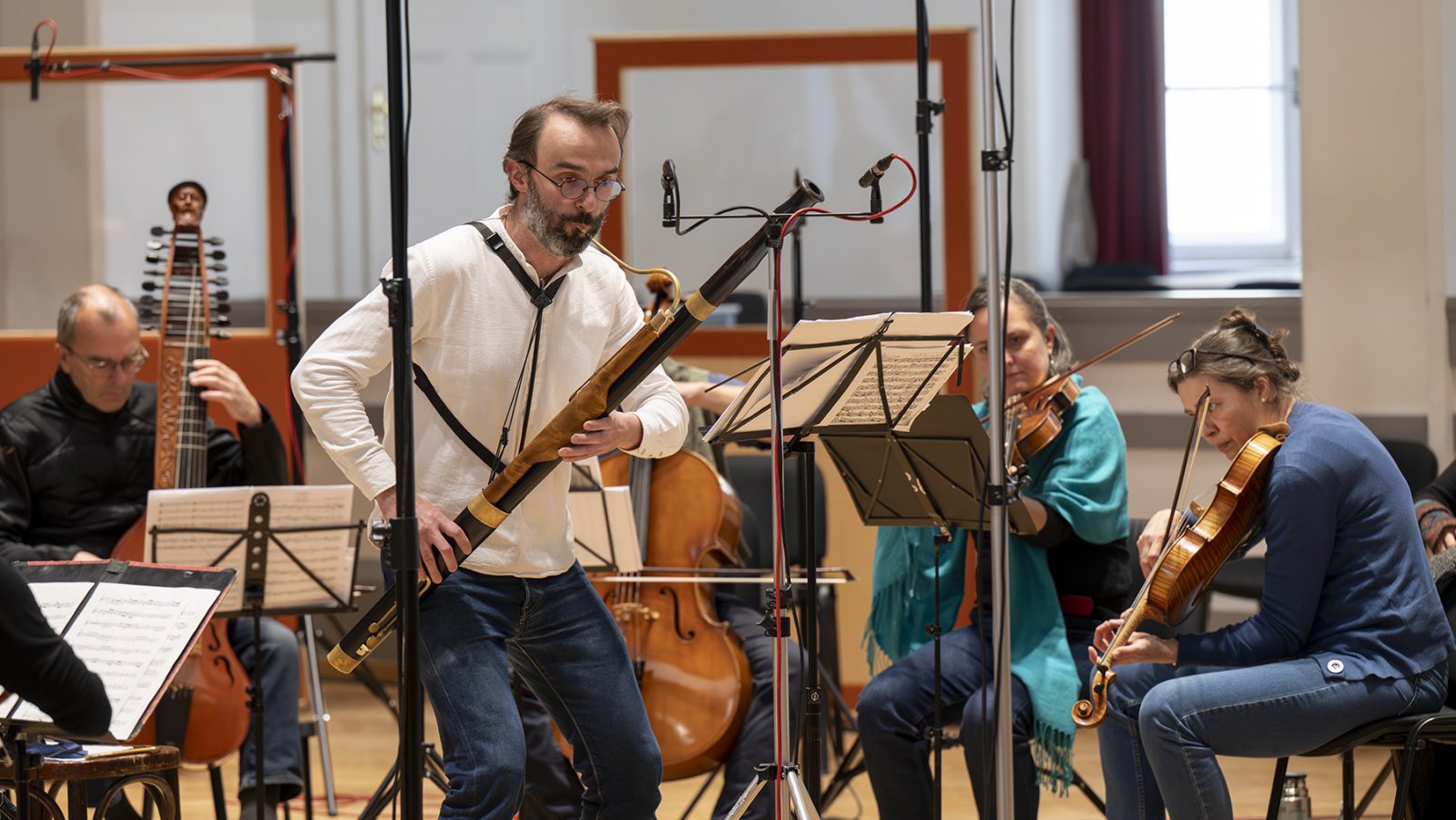
A plot like a musical detective novel, and a story about enthusiasm for an instrument that appears rather rarely in a solo role. The Czech bassoonist Ondřej Šindelář and his Italian bassoon colleague and conductor Sergio Azzolini come together to play a double concerto that has been preserved with attributions to two different composers. Jointly, they open the door to a world of previously unperformed compositions by Anton Zimmermann and Jan Křtitel Vaňhal. Their premiere recording reveals not only the charms of forgotten music, but also the fascinating background of a possible incorrect attribution of authorship – or possibly a case of mutual inspiration – between two masters of the 18th century. Shortly before the release of the album Duality, we talked with Ondřej Šindelář about what he thinks is most interesting about the project.
Ondřej, what led you to research the origin of the Double Concerto for two bassoons, and how did you find Zimmermann’s version in the Prague archive?
Vaňhal’s Double Concerto is well known in the bassoon repertoire. I played it with Sergio Azzolini in Prague in 2019, and there are also several recordings of it. I think it was Sergio who briefly mentioned a different version to me and said that it is not entirely clear who the real composer was. But that was a long time before we made our album. Later, I found a mention of Zimmermann’s Double Concerto and its preservation in the archive of the Prague Conservatoire in a bibliography written by František Červenka.
What do you think is the most striking difference between Zimmermann’s and Vaňhal’s versions of the Double Concerto, especially concerning the different slow movement?
The first movement is almost identical. A few little differences can be found in the manuscripts, but you have to take into consideration that both cases involve copies. Also, these are no major deviations that a listener would easily notice without a score. However, I have to say that personally I am more drawn to the subtle differences in Zimmermann’s version.
Each of the composers wrote an original slow movement. There is an obvious difference in the orchestration: while Zimmermann writes for two bassoons and a full string orchestra (without oboes and French horns, which is common), Vaňhal wrote for just the two bassoons, violas, and a bass line. Because the violas basically double the bass line, what emerges is a texture of between three and four voices. The compositional technique based on suspensions and dissonances is then reminiscent of the style of 18th-century chamber music. On the other hand, Zimmermann chooses the more usual form of a lyrical duet of bassoons with orchestral accompaniment.
Another difference involves the lengths of the individual movements. In the third movement, Vaňhal’s version lacks the repeat, so the last movement is four or five times shorter than the first. Zimmermann’s conception is thus more proportionally balanced.
What was it like for you to record this world premiere together with Sergio Azzolini, your former teacher and a prominent figure in the bassoon world?
Sergio and I are now close friends, and we share a passion for music. Our musical language is similar, and we do not need to talk too much about technical details when working. While making the recording and during the whole project, for example, we played the programme at a festival in Ostrava. The atmosphere was very pleasant and creative, and all of the ensemble members contributed their enthusiasm. For me, personally, it was the experience of a lifetime, firstly because of the lengthy preparations, also because it was my debut, and last but not least thanks to the amazing collective music making.
What fascinates you the most about the music of Zimmermann and Vaňhal, and how do you think their still little known concertos will speak to present-day listeners?
I think the biggest surprise about the album is not just Zimmermann’s Concerto in F major, but Zimmermann as a composer in general. In my opinion, he is a composer of great sensitivity with daring ideas and inventiveness. Some recordings of his symphonies have also appeared recently, and the music is beautiful.
Vaňhal is a composer of exceptional nobility. In addition, he thoroughly understood the instruments he was writing for and was able to emphasise their strengths wonderfully. I think that not only among Zimmermann’s works, but also in the musical legacy of Pressburg (Bratislava) in general, there is a great deal of marvellous music waiting to be discovered.
Is there something you would like to add to the project Duality, and what do you think is important to mention?
As I have already suggested, I think Anton Zimmermann is a composer with a great deal to offer, and I believe that in time he will win over devoted listeners. I would like to thank everyone who helped realise this project – the musicians for their enthusiastic playing and the audio engineer Stephan Reh for his sensitive approach to the recording. We also owe a debt of thanks to the Ministry of Culture of the Czech Republic, the Tichý family, Ms Eva Kinská and her family, and Ms. Markéta Sobolová for their support. I also wish to thank Ms Aneta Tkačenko for production management and Ms Kateřina Tichá for assistance with funding. I am grateful to Petr Kadlec for the materials and photography for the album cover and booklet and to Ms. Daniela Bálková for her graphic layout. Last but not least, I wish to thank the producer Matouš Vlčinský and the company Supraphon for their trust in the project.
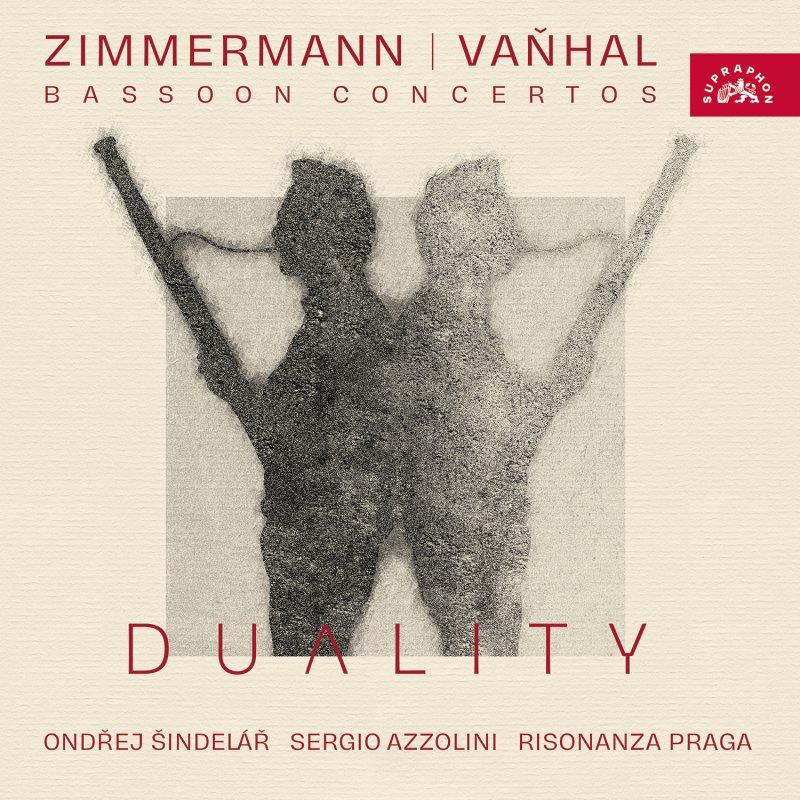
Ondřej Šindelář, Sergio Azzolini, Risonanza Praga
Duality / Zimmermann, Vaňhal - Bassoon Concertos
Buy albumSUPRAPHON a.s. hereby expressly reserves, pursuant to Section 39c(2) of Act No. 121/2000 Coll., the Copyright Act (implementing Article 4(3) of Directive (EU) 2019/790), all rights in respect of all its protected works, in particular literary works, musical works, sound recordings, audiovisual recordings, graphic works and works of fine art, including any reproductions and derivative works thereof, against their use for the purposes of automated text and data mining in digital form (TDM – text and data mining).